
Humans seem to have an innate desire to find the center of things. It gives us a point of reference, a sense of order in a vast space. We talk about the “heartland,” the “downtown core,” or even the “center of attention.” But when we try to pin down the actual center of a geographic area, we find there isn’t just one answer.
The “middle” is a surprisingly slippery concept, defined by mapmakers, demographers, historians, spiritual leaders, and even our own personal feelings. Let’s explore some of the different ways we try to pinpoint the center.
The Mapmaker’s Middle: Geometric & Geographic Centers
Perhaps the most literal definition comes from geometry and geography. If you look at a flat map of a state or country, where is its physical balancing point?
The Centroid: Mathematically, this is called the centroid. Imagine cutting the shape of the area out of a piece of cardboard – the centroid is the point where it would perfectly balance on the tip of a pin. For simple shapes, it’s easy, but for irregularly shaped countries with complex coastlines and islands, calculating this requires complex algorithms.
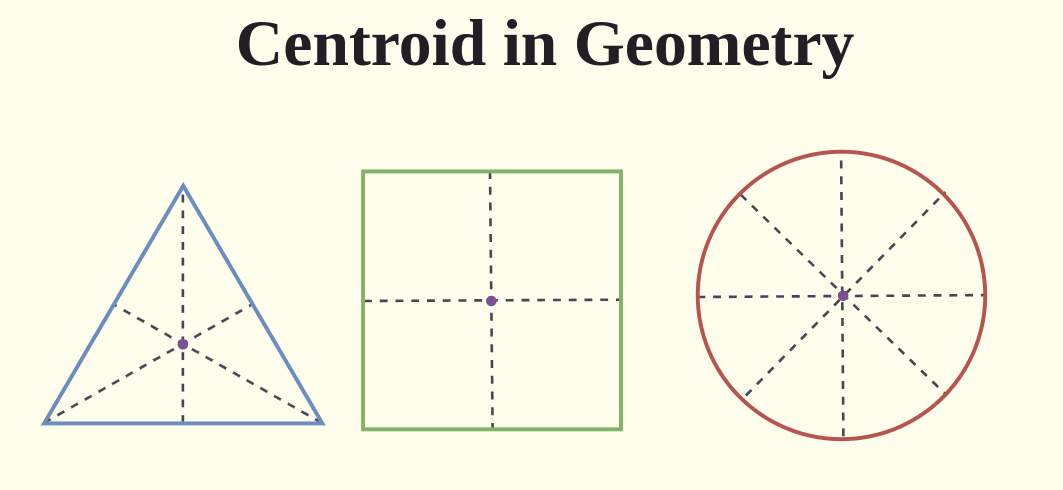
Considering Curvature: For large areas like continents or the whole planet, mapmakers also consider the Earth’s curve using geodetic calculations to find a more accurate geographic center.
Finding the Point: These calculations lead to specific, often remote locations. For example, the geographic center of the contiguous United States (the lower 48) is officially marked near Lebanon, Kansas. The center of North America is often cited as being near Rugby, North Dakota (though nearby Center, North Dakota also makes a claim!).

The Catch: These geometric centers are precise mathematical points, but they often fall in places with little human significance – maybe an empty field or a remote hillside. They tell us about shape, but not necessarily about people or importance. Challenges also arise in defining boundaries precisely (is it the high tide line or low tide line?) and deciding whether to include distant islands.
Where the People Are: The Population Center
If the geometric center feels a bit abstract, perhaps the “center” should be defined by where people actually live. This leads to the concept of the population center.
Center of Gravity: Imagine that same map again, but this time, place tiny weights on it representing every single person, right where they live. The mean center of population is the point where that weighted map would balance.

A Moving Target: Unlike the fixed geometric center, the population center moves as demographics shift. In the United States, driven by westward expansion and growth in the Sun Belt, the mean center of population has marched steadily westward and southward decade after decade since the first census in 1790. It started near Chestertown, Maryland, and as of the 2020 census, it landed near Hartville, Missouri.
What it Tells Us: This moving dot tells a powerful story about migration, settlement patterns, and where the bulk of human activity is concentrated within a country.
Seats of Power & History: Political & Historical Centers
Geography and population aside, we often think of the “center” in terms of power and history.
Capital Cities: Washington D.C., London, Ottawa, Tokyo – these cities are the administrative hearts of their nations. They are centers of government, lawmaking, and often national identity, regardless of whether they sit anywhere near the geographic middle. Their locations are usually chosen for strategic, historical, or political reasons.

Historical Hearts: Some places remain central in our minds because of their history, even if the political or population center has shifted. Think of Rome for the Roman Empire, Cusco as the navel of the Inca world, or Philadelphia as the birthplace of the United States. These places hold a deep historical or cultural resonance as points of origin.
Navels of the Earth: Cultural & Symbolic Centers
Beyond politics and maps, many cultures identify centers based on spiritual beliefs, mythology, or symbolic importance.
Sacred Centers: Many religions designate specific places as uniquely holy or central to their faith – think of Jerusalem for Judaism, Christianity, and Islam; Mecca for Islam; Vatican City for Catholicism; Bodh Gaya for Buddhism. These are often pilgrimage sites, seen as points of connection between the divine and the earthly. Ancient Greeks had the concept of the omphalos (navel), often marked by a stone, signifying the center of the world (most famously at Delphi).
Mythological Origins: Creation stories and myths often pinpoint specific locations as the place where the world or a people began, embedding centrality into cultural identity.
Declared Centers: Sometimes, a place simply declares itself the center! Felicity, California, officially recognizes a spot designated as the “Center of the World,” complete with a pyramid marker – a fun, symbolic claim recognized by Imperial County and France. Other quirky roadside attractions sometimes make similar lighthearted claims.
Hubs of Culture: At different times, certain cities become recognized centers of art, philosophy, or innovation – think Renaissance Florence or Paris during the Belle Époque.
Hubs of Activity: Economic & Functional Centers
In our modern, interconnected world, centers can also be defined by economic activity and influence.
Financial Centers: Cities like New York (Wall Street), London, Hong Kong, and Tokyo act as nerve centers for global finance, impacting markets worldwide.
Industry Hubs: Places become synonymous with specific industries, acting as functional centers – Silicon Valley for technology, Hollywood for entertainment, historically Detroit for automobiles.
A Center for Every Purpose
So, where is the center? As we’ve seen, there’s no single answer. Is it the mathematically precise balancing point on a map? Is it where the most people live? Is it the seat of government, a sacred site, a bustling financial hub, or simply the place you call home?
Each definition serves a different purpose and tells a different story. The geometric center speaks to pure geography. The population center tracks human settlement. Political centers mark administration, while cultural centers speak to belief and identity. Economic centers highlight influence, and personal centers ground our individual lives.